
Fire Extinguisher Service.
Sales, inspection, recharge, and hydrostatic testing — handled by a local rep who knows your facility. Not a contractor dispatched from three states away.
Fire Extinguishers
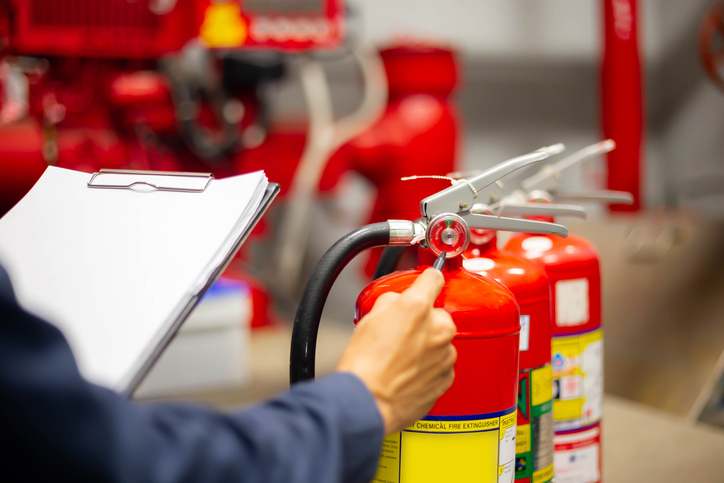
Inspected. Tagged.
Done Right.
"A fire extinguisher that hasn't been properly inspected is just a red cylinder — it's not protection."
We handle the full lifecycle of your fire extinguisher program — from initial placement consultation and sales, through annual inspections, 6-year maintenance, 12-year hydrostatic testing, recharging, and final retirement. Every extinguisher we service gets tagged and documented on the spot.
Annual Inspection
Visual and mechanical inspection of every extinguisher per NFPA 10. We check pressure, condition, accessibility, signage, and mounting — then tag and document everything.
6-Year Maintenance
Complete internal examination — every part disassembled, inspected, cleaned, and reassembled per manufacturer specs. Required every six years by NFPA 10.
Recharge Service
After any discharge — accidental or emergency — we recharge, re-inspect, and return the extinguisher to full service-ready status.
Hydrostatic Testing
Required every 12 years (5 for CO2), hydrostatic testing subjects the cylinder to high pressure to verify structural integrity. We handle the full process and documentation.
Placement Consultation
Not sure if you have the right extinguisher types in the right locations? Your rep will walk your facility and identify gaps before the fire marshal does.
Sales & Replacements
Ansul and Amerex units available. If an extinguisher reaches end of life or fails inspection, we replace it on the same visit whenever possible.
Your Inspection Schedule.
Quick Check
You do this in-house. Verify the extinguisher is in place, visible, unobstructed, and the gauge reads in the green. Document it.
Full Inspection
Heiman comes to you. Full mechanical and visual inspection, tag, and documentation. NFPA 10 Section 7.3 compliance on every unit.
Internal Maintenance
Full disassembly, internal inspection, cleaning, part replacement as needed, and reassembly per manufacturer specifications.
Hydrostatic Test
High-pressure cylinder test to verify structural integrity. Required for stored-pressure and CO2 units (5 years for CO2).
What Type Do You Have?
Different hazards require different extinguisher types. Using the wrong one can make a fire worse — or void your compliance. Here's what we service and where each belongs.
Dry Chemical
The most common type. Effective on ordinary combustibles, flammable liquids, and electrical fires. Found in offices, warehouses, and most commercial buildings.
Wet Chemical
Specifically designed for commercial cooking equipment. Required by code in commercial kitchens — suppresses cooking oils and fats that standard dry chemical cannot handle.
Carbon Dioxide
No residue, no cleanup. Ideal for electrical equipment, server rooms, and precision manufacturing. Leaves no agent behind that could damage equipment.
Water / Foam
Best for ordinary combustibles like wood, paper, and fabric. Water mist variants are safe around electrical. Foam units add coverage for flammable liquids.
Why Businesses Fail Inspection.
The fire marshal sees the same violations over and over. Don't be on the list.
Expired or Missing Tags
No annual inspection tag = automatic fail. If the tag is more than 12 months old or missing entirely, the extinguisher is non-compliant regardless of its actual condition.
Wrong Type for the Hazard
An ABC extinguisher in a commercial kitchen won't cut it. Code requires a K-class unit at the hood. Wrong type = wrong protection and a code violation.
Blocked or Inaccessible Units
Stacked inventory, locked cabinets without signage, or extinguishers mounted too high all create violations. NFPA 10 mandates clear access within specific travel distances.
Discharged or Low Pressure
A gauge in the red means the unit is no longer serviceable. Discharged extinguishers — even partially — must be recharged before being returned to service.
Overdue Hydrostatic Testing
Cylinders that have passed their 12-year hydrostatic test date (5 years for CO2) are out of compliance and must be tested or condemned.
Recharge vs. Replace — How We Decide
Your rep will make this call on-site. Here's the logic we use to keep your costs reasonable without compromising compliance.
Recharge — When It Makes Sense
- Unit discharged but cylinder is in good condition
- Annual inspection passed, just needs refill
- 6-year maintenance complete, agent replaced
- Cylinder has passed hydrostatic test
- Unit is less than 6 years old
- No corrosion, dents, or damage to shell
Replace — When It's Time
- Cylinder exceeds 12-year hydrostatic test date
- Visible corrosion, pitting, or dents on shell
- Valve or neck threads are damaged
- Failed hydrostatic pressure test
- Repair cost approaches replacement cost
- Wrong type for current facility hazard class
NFPA 10 requires monthly visual checks (done by you), annual inspections by a licensed service company like Heiman, 6-year internal maintenance, and 12-year hydrostatic testing. Missing any of these intervals puts you out of compliance.
Depending on your jurisdiction, you can face fines, a compliance order with a deadline to correct violations, or in serious cases temporary closure until hazards are addressed. More importantly, non-compliant extinguishers may not work when you need them.
NFPA 10 specifies maximum travel distances to an extinguisher based on hazard class — 75 feet for light hazard, 75 feet for ordinary hazard, and 50 feet for extra hazard occupancies. Your Heiman rep will walk your facility and map out exactly what you need and where.
No — NFPA 10 requires that recharging be performed by trained personnel using proper equipment. Self-recharging voids compliance and creates safety risks. After any discharge, call us and we'll handle it correctly.
Yes. We service all major brands including Ansul, Amerex, Kidde, Buckeye, and others. We're an authorized Ansul and Amerex dealer so we carry genuine replacement parts and agents.
Every extinguisher we service gets tagged with the service date, technician ID, and next service due date. We also provide documentation you can keep for your records to demonstrate NFPA 10 compliance during inspections or audits.
"Dillon was great to work with for our annual fire extinguisher inspections. Very reasonably priced, much cheaper than the competition."
"Dillon has been instrumental in maintaining our food truck, extinguishers, and commercial kitchen hoods. His professionalism and efficiency truly set him apart."
"Great quick service. We've been using Heiman Fire for years and they've never let us down. Show up when they say they will, tag everything, done."
Ready to Get Compliant?
Your rep covers your county. Schedule an inspection or get a quote — same family, same dedication since 1947.